
Introduction To CMO
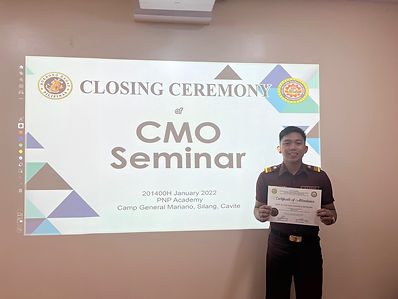
Civil-Military Operations (CMO) refer to a planned activity that aims to promote public trust and strengthen the cooperation and collaboration of the community with the Armed Forces of the Philippines. It is composed of three pillars: Information Support Affairs (ISA), Public Affairs (PA), and Civil Affairs (CA). CMO involves the coordination and participation of civil and military forces during emergencies or crises and encompasses various endeavors such as counterinsurgency, peacekeeping, and peace-building.
This kind of operation is formulated to bridge the gap between the community and the government forces, such as the Philippine National Police and the Armed Forces of the Philippines. Nowadays, the public has already doubted whether our organization is trustworthy, competent enough, or not. Civil-military operations have been a great help in winning the hearts and minds of our people. Winning their hearts and minds is not that easy, which is why there are lots of programs created by the CMO. The dissemination of information is one of the things that the CMO is improving. Informing the public or the community will give them awareness of the plans of the government forces as well as the actions taken for every kind of event and situation.
I discovered that gaining the trust of the public in the government's military operations can aid in weakening the communist terrorist group. Therefore, the government is actively enhancing this activity for the benefit of all. By mastering Civil-Military Operations, the organization can readily request assistance from citizens. As law enforcement officers, our achievement lies in winning the hearts and minds of the community and effectively accomplishing tasks with competence, aiming to minimize collateral damage.
Civil-military operations (CMO) are an essential aspect of military strategy that involves cooperation and coordination between the military and civilian organizations to achieve common goals. For Cadets, it is crucial to understand the importance of CMOs, as it is likely that they will be involved in such operations during their military careers. CMOs are typically carried out during peacekeeping missions, humanitarian operations, disaster relief efforts, and other operations that require the military to interact with civilians. By working with local communities and organizations, CMOs can help the military build trust and relationships with the people they are trying to help. This, in turn, can improve the effectiveness of military operations and help achieve long-term stability and security.
Moreover, CMOs are critical to achieving the strategic objectives of military operations. The military is often called upon to respond to complex situations that require a broad range of capabilities beyond traditional combat operations. In such situations, CMOs play a crucial role in helping to build stability and security by working with the civilian population to address their needs and concerns. By focusing on the welfare of local populations, CMOs can help build trust and support for the military's mission, which is essential for long-term success. Therefore, Cadets must recognize the importance of CMOs as they prepare for their military careers and understand how to interact with and engage with local communities effectively.


Public Affairs
Today's topic regarding the CMO is one of its pillars, which is public affairs. Public Affairs are defined as how governmental and non-governmental organizations persuade their respective audiences through communication. The study of how governments and non-governmental organizations employ communication to influence their audiences can be summed up as public affairs, a discipline that has many different expectations. The analysis of how governments and non-governmental organizations utilize communication to affect their audiences can be summed up as public affairs, a field that has many different subfields. All activities that the government or non-governmental organizations (NGOs) take to educate or persuade the public are considered public affairs.
Governments and other organizations that engage with the general public in the said pillar. A wide range of activities are included in public affairs, including political leadership, policy development, law enforcement, and public communication. The definition of public affairs is "the acts performed by governments to fulfill their responsibilities to their citizenry" (Cox & Doolittle). To keep society running well, governments must fulfill several obligations. These obligations include making provisions for the health and welfare of its people through programs for housing aid, work opportunities, and education, as well as making sure that its citizens are safe from harm.
Protecting the rights and welfare of the community is the role of law enforcement in public affairs. In public affairs, prevention is law enforcement's main objective. Enforcing the laws that control how people behave in a community is the responsibility of law enforcement officials. They also aid victims and witnesses, conduct investigations into crimes, respond to emergencies, patrol neighborhoods, enforce traffic laws, detain criminal suspects, and serve warrants on individuals suspected of committing crimes against people. That is why the public and law enforcement must always have a good relationship.
Public Affairs is an essential aspect of a Cadet's training and education. As future leaders in their respective fields, cadets need to understand the importance of effectively communicating with the public, including the media, stakeholders, and the wider community. By engaging in public affairs activities, Cadets can develop the skills and knowledge necessary to communicate their ideas and values effectively. These activities can include participating in community service projects, attending public meetings, and interacting with local media outlets.
Moreover, public affairs activities can help Cadets understand the importance of civic engagement and community service. By participating in public affairs activities, cadets can gain a deeper appreciation for the impact that their future careers can have on the wider community. This understanding can help them become more responsible and effective leaders, with a focus on making a positive impact on society. Ultimately, by prioritizing public affairs in their education and training, Cadets can develop the skills and mindset necessary to become successful leaders in their chosen fields.

Civil Affairs
"Civil-Military Operations" (CMO) refers to the use of military force to assist civil authorities in times of disaster or conflict. Both conventional and special operations forces are capable of conducting CMO. It is a crucial part of the greater idea of combined operations, which entails the integration of all military, civilian, and allied resources to accomplish a desired goal. A combat zone's peace and stability can be restored through civil affairs. While each side in a civil war must have its objectives, it's also crucial that they cooperate for the benefit of the local populace.
The process of bringing stability and peace back to a conflict zone is known as civil affairs. Every stakeholder is involved, including the government, NGOs, international organizations, local communities, and individuals. Reconciliation between combatants is encouraged, and a conflict-affected area's peace and security are to be restored as a response.
The definition of civil affairs is "the employment of civilian instruments to facilitate peacebuilding" (United Nations Office for Project Services). Tools classified as civilian are those that don't use military force or armaments, like facilitation, mediation, and negotiation.
A stakeholder is an individual, a team of individuals, or an organization that has an interest in the business. A stakeholder is someone who has a legitimate interest in the profitability and operation of the organization (Rosenberg & Dworkin, 2013). The stakeholders each have unique perspectives on the effectiveness and success of the business. They might not always concur with or support the management's actions, but they should still be taken into account because they have their ideas about what has to be done. Having the help of every stakeholder will greatly affect the work of the government forces, making it easy to achieve the desired plan, which is to weaken the enemy and win the hearts of the people.
Civil Affairs are a critical component of the military's engagement with the civilian population, both at home and abroad. For Cadets, understanding the importance of civil affairs is essential to their education and training as future military leaders. Through civil affairs activities, Cadets learn how to build relationships with local communities, understand their needs, and work towards achieving common goals.
Civil Affairs training also provides cadets with a unique perspective on the importance of cultural sensitivity and diversity in military operations. By understanding the customs, traditions, and values of different communities, Cadets can work to build trust and respect with local populations, which can ultimately lead to more effective and successful military operations. Moreover, civil affairs activities provide Cadets with opportunities to engage in community service and humanitarian aid, which can help build goodwill and promote stability in areas where the military is engaged. Overall, civil affairs is an essential component of a cadet's training, helping them develop the skills and knowledge necessary to become effective and responsible leaders in their future military careers.

Information Support Affairs
Information management is a topic covered by the subject of information support affairs. All intelligence activities must be coordinated and integrated for decision-makers to receive timely and reliable information that will help them attain their strategic objectives. To offer the intelligence community a wide range of services, such as analysis, production, distribution, and collection, Information Support Affairs is a crucial component of intelligence. This department's responsibility is to offer these services to both internal clients like other government agencies and external clients like foreign governments, military organizations, and private businesses.
According to our speaker, there are three types of propaganda: white, gray, and black propaganda, wherein white propaganda refers to propaganda that is disseminated and acknowledged by the sponsor or by an accredited agency. The gray propaganda refers to those not specifically identified with any source. Then, lastly, black propaganda is identified with a source other than the true one to mislead the target audience.
As a Law Enforcement Officer with knowledge and mastery of information support affairs, you were able to be a competent officer who disseminated reliable and credible information. The information being disseminated will be used to fight or destroy the communist terrorist group, which thankfully has lost its numbers. Many leftists are doing their job to spread misleading information to persuade youths to join their organization. With some counter-propaganda, we can open the minds of our youths to the truth when they join the said group.
Moreover, ISA can help Cadets understand the importance of transparency and trust in military operations. By communicating openly and effectively with the public and media, Cadets can help build confidence in the military's actions and goals, which can ultimately lead to greater public support for military operations. Additionally, ISA activities can help Cadets understand the importance of protecting sensitive information and managing the risks associated with information sharing. By understanding the potential risks and challenges of managing information in the military, Cadets can develop a responsible and effective approach to information management and security, which is critical to success in the modern military environment.
In conclusion, ISA is an important aspect of a Cadet's education and training, providing opportunities to develop essential skills and knowledge for future military operations. By engaging in ISA activities, Cadets can gain a better understanding of the complexities and challenges of modern military operations, as well as the importance of transparency and effective communication in building public trust and support.

Information Operation
Information operations include strategic communication and psyops. Strategic communication is the process of communicating a message to an audience to achieve a particular goal. It is not just about delivering the message; it is also about how it is delivered and what kind of impact it has on the audience. Strategic communication can be defined as "the art of persuasion" (Cherry, 2016). Military nomenclature for psychological warfare is "psyops." Propaganda, misleading facts and other methods of public persuasion are used to influence an audience's emotions or conduct. Psyops involve communications that are intended to speak to a person emotionally to affect their emotions and behavior.
On this subject being discussed, the difference between psyops and strategic communication was emphasized. On Psyops, for example, you are giving a message to deter those persons and making some scenarios for them to be intimidated to do such acts. On the other hand, in strategic communications, you are giving information on a legal basis, in which the statement used is following the rules where there is no law being violated.
As a Law Enforcement Officer, it is very important to know how to use such tactics and strategic communication. Being an officer, we need to have ample wisdom with these two for us to be better in our field. Some people are very uncooperative with our government's rules, making it hard for our uniformed personnel to implement some laws. To be a competent law enforcement officer, you should know what kind of communication to use depending on the audience you are targeting. An information operation is very important, which is why we need to master it.
Information operations (IO) play a crucial role in shaping the way individuals and organizations perceive and respond to certain issues. In the context of Cadet life, IO can be used to influence Cadets' behavior, attitudes, and beliefs in a variety of ways. For example, IO can be used to promote a positive image of the military and cadet life, highlight the benefits of military service, and encourage participation in training exercises and other activities. It can also be used to address negative stereotypes and misconceptions about the military, counter propaganda from opposing forces, and enhance the effectiveness of military communication and decision-making.
IO can be implemented through a range of channels, such as social media, news outlets, public relations, and educational programs. Cadets can be targeted with messaging that is tailored to their individual interests, experiences, and motivations. IO can also be used to build relationships between Cadets and military leaders, foster a sense of camaraderie and team spirit, and promote a culture of accountability and responsibility. By using IO in a strategic and ethical manner, cadet life can be made more engaging, effective, and fulfilling for everyone involved.



Mystery Of Tomorrow
'Yesterday is history, tomorrow is a mystery, and today is a gift." That's why they call it "present." Master Oogway of Kungfu Panda
Tomorrow is a concept that holds a lot of promise, anticipation, and potential. It represents the future, and what is yet to come. However, the future is uncertain, and tomorrow is not a guarantee. Nevertheless, we still plan for tomorrow and hope for a better future.
Have you ever thought about what the future has in store for you? Are you prepared for whatever may unfold before you? You might wonder what it means that you live in a world full of surprises. And it will always be a mystery until the universe reveals it.
People keep thinking about the past and refuse to move on, leading to uncertainties in the future. They are anxious about the things that are waiting for them, for they are taking into consideration things that took place in the past. They also tend to think that what happened in the past may recur in the future. It causes them to be afraid of knowing what the future will bring.
One of the finest things to do is plan for the future. You will be more prepared to avoid doubts, difficulties, and battles if you anticipate them. Make use of your past mistakes as a lesson to avoid making the same mistakes again. Keep in mind that you should consider the lessons learned from the past. They will serve as your tools for reshaping yourself and your future.
As I lived my life, I also had these uncertainties about my future. When I was younger, I dreamed of becoming an engineer. A few years later, I shifted my thoughts toward becoming a seaman. I was never sure what profession I would have in the future. Moreover, I did not bother to think that I should be at my best to have a better future. Finally, I came to my senses when I encountered life-changing events in my life. This made me realize that if I never harness my abilities, strengthen my capabilities, and work well on my dreams, all those mishaps will happen again in the future. Bearing this in mind, I completely changed my views on life and decided to work hard on shaping my future.
At the point in my life when I decided to become a Police Officer, I was never more certain. Because of this, I concentrated on reaching this dream. I prepared myself physically, mentally, and psychologically. I did and will still do my best for this to happen. I will never be anxious about my future, for I know I have done the best I can. Seeing myself now, as a member of this institution, I can say that I have prepared well for my future.
No one may be able to know what the future has in store for him. But honing and preparing for it somehow shapes the future that lies ahead.

The Pale Blue Eye
The movie "The Pale Blue Eye" was a powerful and thought-provoking experience. The film explores the darkness that can lurk within the human heart as well as the psychological toll that can come from serving in a position of power. As a future member of the armed forces, the movie's themes struck a deep chord within me.
One of the most prominent themes of the movie is the corrosive effect of power on the human psyche. The retired detective, becomes a teacher at the West Point Military Academy and is immediately confronted with the immense power that the Cadets and officers wield. He watches as the Cadets are broken down and rebuilt into efficient killing machines and the officers engage in a brutal power struggle that threatens to destroy them all. It is a sobering reminder that, no matter how virtuous our intentions are, power can easily corrupt even the strongest of wills.
Another theme that resonated with me was the movie's exploration of the nature of justice. The retired detective finds himself investigating a series of brutal murders that have taken place at the Academy, and he is forced to confront the fact that justice is not always straightforward. In a world where those in power can easily manipulate the truth, the detective struggles to find a way to bring the killer to justice without compromising his moral principles.
The film also delves into the psychological toll that can come from serving in a position of power. The main character is haunted by his memories of the Civil War and the atrocities he witnessed and committed during that time. He is also forced to confront the fact that he is not as young as he used to be and that he is no longer in control of his destiny. The film is a powerful reminder that serving in the military can take a heavy toll on one's mental and emotional well-being.
Ultimately, "The Pale Blue Eye" is a sobering reminder of the dangers of power and the complexity of justice. As a Cadet, it has given me much to reflect on as I prepare to serve my country. It has reminded me of the importance of always striving to do what is right, even in the face of overwhelming adversity, and of the need to be constantly vigilant against the corrupting influence of power. I am grateful for the opportunity to have watched this film and for the lessons that it has taught me.
Locating Azimuth
"If your actions inspire others to dream more, learn more, do more, and become more, you are a leader." John Quincy Adams
"True North" is the title of a book by Bill George, former CEO of Medtronic, in which he shares his insights on how to become an authentic leader. The book draws from George's own experiences and interviews with over 125 leaders to argue that the most effective leaders are those who know and live their values, beliefs, and principles.
Through his analysis, George identifies three key stages in the journey toward becoming an authentic leader: understanding your life story and values, practicing your leadership through your life experiences, and reframing your life story to integrate your leadership experiences. By following this framework, George argues that leaders can develop the self-awareness and self-confidence needed to lead effectively and inspire others to follow them. "True North" is a valuable resource for anyone seeking to develop their leadership skills and find their true purpose as a leader.
As a Cadet reading "True North" by Bill George, I was struck by the author's emphasis on the importance of authentic leadership. George argues that leaders who have a clear understanding of their values, beliefs, and purpose are better equipped to lead with integrity, inspire their followers, and create lasting impact. This idea resonated with me as a cadet, as I see firsthand the impact of leaders who are not true to themselves and lack a clear sense of purpose.
The book emphasizes the importance of resilience in authentic leadership. George argues that leaders who can overcome setbacks and failures are better equipped to inspire others and create lasting impact. As a Cadet, I have faced my fair share of challenges and setbacks, but I have learned to embrace these experiences as opportunities for growth and development.
Overall, "True North" provided me with valuable insights into the qualities and practices of authentic leadership. As a Cadet, I am committed to developing my leadership style based on a strong foundation of self-awareness, service, learning, and resilience.


Coach Carter
“We're a team. One person struggles, we all struggle. One person triumphs, we all triumph”- Anonymous
"Coach Carter" is an excellent movie that teaches valuable life lessons and inspires viewers to be their best selves. It's a powerful reminder that education is not just a means to an end but is something that can enrich our lives and provide us with opportunities to achieve our goals.
I also appreciated the movie's emphasis on discipline and hard work. Coach Carter's strict approach to coaching may have been unpopular with his players and the community at first, but it ultimately paid off. The team's success on the court was a direct result of the players' commitment to following the rules and working hard to improve their skills.
The movie's focus on mentorship was also something that resonated with me. Coach Carter's role as a mentor to his players was a critical component of their success. He believed in them and pushed them to be their best, both on and off the court. This underscores the importance of having strong, positive role models in our lives who can help guide us toward success.
In the movie, we see how the basketball team was transformed through the principles of discipline, hard work, and determination. These are also the core values that are emphasized in the life of a Cadet. Just as the team had to go through rigorous training and practice to achieve success, Cadets must undergo a similar process of physical and mental preparation to become effective leaders.
A powerful and inspiring movie that accurately depicts the challenges and realities of life. The movie shows that success is not just about talent or natural ability; it is also about the effort and dedication that one puts in to achieve their goals. The character of Coach Carter represents an ideal role model just like the upper class for people of all ages and backgrounds, as we inspire the underclass to strive for excellence and not settle for mediocrity. The movie's themes of leadership, teamwork; and personal responsibility are universal and can be applied not just to sports but also to one's personal and cadetship life.
Overall, The movie also highlighted the importance of teamwork, communication, and accountability, which are essential in both sports and Cadet life. It demonstrated the value of perseverance, integrity, brotherhood, camaraderie, and leadership, which are all crucial qualities for Cadets as they prepare for a career of service to their country.


Dancing Guy
The Dancing Guy video is a powerful example of the impact that one individual can have on a group. In the video, we see one lone individual start to dance at a music festival, seemingly without any concern for what others around him might think. As he continues to dance, he slowly begins to draw others into his orbit, until eventually, he is leading a full-on dance party.
Watching this video, I'm struck by the power of individual actions to inspire others. The Dancing Guy is not a particularly skilled dancer, and he doesn't have any kind of official authority or leadership position. Yet his enthusiasm and energy are contagious, and before long he has an entire crowd of people dancing and celebrating with him.
At the same time, I think the video also highlights the importance of taking risks and stepping outside our comfort zones. The Dancing Guy could have easily been self-conscious or worried about how he might be perceived by others, but instead, he threw caution to the wind and just started dancing. And in doing so, he ended up creating a truly magical moment that brought joy and energy to everyone around him.
Dancing Guy's infectious energy and fearless spirit had a powerful impact on the crowd of festivalgoers. As a Cadet, this kind of enthusiasm and leadership can be incredibly valuable in inspiring others and building a strong, cohesive team. By stepping outside your comfort zone and setting an example of confidence and positivity, you can help to create a culture of camaraderie and support that will benefit everyone in the Cadet Corps.
Finally, I think the Dancing Guy video is a reminder of the power of community and connection. In our increasingly individualistic world, it can be easy to forget the importance of coming together with others to share experiences and build a sense of shared identity. Watching the crowd of people dancing and celebrating together in the video, in the Academy it's clear that the Dancing Guy's actions had a profound impact on the Cadets, bringing them together in a truly transformative way.

